Bedbugs
Bed bugs
Bed Bug

Bed bugs (Cimex lectularius) are small, wingless, oval-shaped insects that grow to about 5–7 mm in length when fully adult—roughly the size of an apple seed. Their bodies are reddish-brown and remarkably flat, allowing them to squeeze into gaps as thin as a credit card. After feeding on blood, they swell and become darker, almost purple-red. Unlike many pests, bed bugs do not jump or fly; they crawl quickly and are expert hitchhikers, travelling on luggage, second-hand furniture, clothing, and even handbags.

Bed bugs feed exclusively on blood, preferring humans but also biting pets, bats, and birds if necessary. They are nocturnal and emerge from hiding at night, attracted by body heat and the carbon dioxide we exhale. A bed bug pierces the skin with two hollow feeding tubes: one injects an anaesthetic and an anticoagulant, the other sucks blood. Because of the anaesthetic, most people feel nothing at the time of the bite. A single bed bug can consume several times its own body weight in blood during a 5–10 minute feed, then retreat to digest for days or weeks.

These pests can survive almost anywhere in the home where people rest or sleep for extended periods. Although they are most strongly associated with bedrooms, they are frequently found in:

  • Seams, tufts, tags, and piping of mattresses and box springs
  • Cracks in bed frames and headboards (especially wooden ones)
  • Behind loose wallpaper, skirting boards, and electrical socket plates
  • Inside upholstered furniture—sofas, armchairs, recliners
  • Under carpets and along carpet edges
  • In curtains, folds of clothing left on chairs, and even inside clocks or smoke alarms

They do not need dirty conditions to thrive; luxury hotels, spotless apartments, and hospitals all suffer infestations. All they need is a host to feed on every few days and tiny crevices to hide in during the day.

Signs of a bed bug infestation

  1. Bites: Most people react with small, red, raised welts that itch intensely. Bites often appear in lines or clusters (“breakfast, lunch, and dinner”) on exposed skin—arms, legs, neck, shoulders. Some individuals show no reaction at all, making detection harder.
  2. Blood stains: Tiny rust-coloured or dark red spots on sheets, pillowcases, or pyjamas from crushed engorged bugs or from feeding.
  3. Faecal spots: Black or dark brown pinhead-sized dots (digested blood) left on mattresses, bed frames, and walls. These are most noticeable along mattress piping, seams, and corners.
  4. Cast skins: As nymphs grow, they shed pale yellowish skins five times before becoming adults.
  5. Eggs: Tiny (1 mm) pearly-white eggs glued in clusters in hidden crevices—often 200–500 per female over her lifetime.
  6. Live bugs: Seeing the insects themselves, especially just before dawn when they are most active.
  7. Musty-sweet odour: Larger infestations produce a distinctive sickly-sweet smell from their scent glands.

Why bed bugs are so difficult to eliminate

  • A single mated female can start an entire infestation.
  • They can survive 6–12 months (sometimes longer) without feeding.
  • They hide in the tiniest cracks and are active mainly at night.
  • Eggs are resistant to many insecticides and are often glued out of reach.
  • Over-the-counter sprays and “bug bombs” usually make the problem worse by scattering the bugs to new areas.

Give SWAT a call today for a free, no-obligation quotation. Our technicians are fully trained and equipped to find and eliminate even hidden infestations quickly and discreetly.

Sleep tight—and let the professionals make sure the bed bugs really don’t bite!

Ants
Ants Destroying wood
Ants Destroying Wood

There are thousands of ant species worldwide, but only a handful commonly become pests in and around homes. Some, like black garden ants (Lasius niger), prefer to stay outdoors, nesting under paving slabs, in lawns, or at the base of walls. Others, such as pharaoh ants, Argentine ants, or ghost ants, are far more likely to invade houses in search of food and water, especially in kitchens, bathrooms, and pantries. The vast majority of household ants are simply nuisance pests—they don’t bite, sting, or destroy property; they just march in long trails across your worktops looking for crumbs and sweet spills.

Getting rid of ants effectively almost always requires treating both the inside and outside of the property at the same time. If you only kill the ants you see indoors, more will quickly replace them from the nest, which is usually outdoors (under slabs, in soil, behind brickwork, or even inside wall voids). Likewise, treating only the garden leaves the foraging trails inside the house untouched. A combined approach breaks the cycle.

Professional pest controllers usually rely on two complementary methods that together give fast knockdown and long-term colony elimination:

  1. Residual insecticide spray
    A professional-grade liquid insecticide is lightly sprayed along ant trails, entry points (around doors, windows, pipes, and cracks), skirting boards, and external perimeter walls. Modern residual sprays (usually containing synthetic pyrethroids, neonicotinoids, or fipronil) remain active for weeks or months. Foraging ants walk through the invisible film, pick up a lethal dose on their bodies, and carry it back to the nest on their legs and antennae. This “transfer effect” helps kill ants that never even entered the treated house.
  2. Ant bait (granules or gel)
    Baits are the real colony killers. They contain slow-acting, non-repellent insecticides (commonly indoxacarb, fipronil, boric acid, or hydramethylnon) mixed with an attractive food source—sweet, protein, or oily—depending on the ant species. Worker ants eagerly consume the bait and, crucially, carry it back to the nest in their stomachs to feed the queen and larvae through trophallaxis (mouth-to-mouth food sharing). Because the active ingredient is slow-acting, workers have time to recruit more foragers and distribute the poison widely before any die-off is noticed. Within days to a couple of weeks, the entire colony—including the queen(s)—is wiped out, and the problem disappears at source.

Why this combination works so well:

  • The spray provides immediate reduction of ants indoors and creates a protective barrier around the house.
  • The bait eliminates the colony outdoors so the trails never restart.
  • Using both together avoids the common failure of DIY ant sprays alone, which simply scatter the colony and create multiple satellite nests.

This two-pronged approach (residual barrier + baiting) is widely regarded by pest-control professionals as the gold standard for safe, effective, and long-lasting ant control in domestic properties.

Call or WhatsApp Swat Exterminators for a non obligation free quote

Cockroach American
Cockroach American
Cockroach American

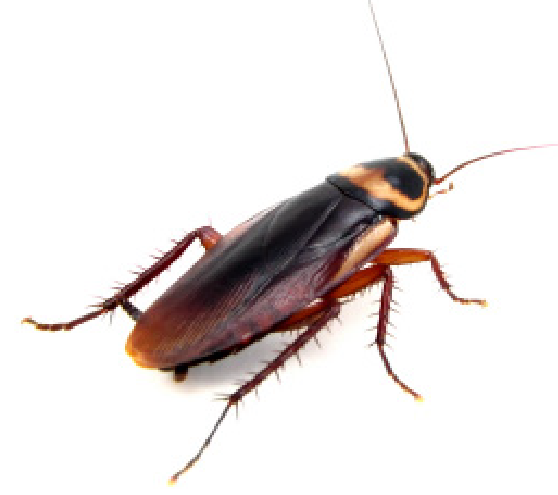
American Cockroach (Periplaneta americana)

Commonly called the “Durban Roach” in KwaZulu-Natal

Appearance

The American cockroach is one of the largest cockroach species that invades homes and buildings:

  • Adults measure 28–44 mm long (up to 50 mm with wings extended)—sometimes almost 2 inches.
  • Colour is a distinctive glossy reddish-brown to mahogany, with a pale yellow or cream-coloured band or halo just behind the head (on the pronotum). This yellowish margin is a key identification feature.
  • Both males and females have long, fully developed wings that extend beyond the tip of the abdomen. Unlike the German cockroach, American cockroaches are strong fliers, especially on warm, humid nights—they are often attracted to lights and can fly in through open windows or from trees onto roofs.

Habitat and behaviour

Despite the name “American,” this species originated in Africa and was spread globally through trade. In South Africa it thrives in warm, humid coastal areas (KwaZulu-Natal, Eastern Cape, Western Cape lowveld, and Limpopo).
They prefer warm, dark, damp environments and are commonly found in:

  • Sewer systems, manholes, and storm-water drains
  • Basements, boiler rooms, and underground parking garages
  • Kitchen and bathroom cupboards, especially near leaking pipes
  • Void spaces under sinks and behind large appliances
  • Restaurant and hotel grease traps and drainage channels
  • They can survive outdoors year-round in subtropical and tropical areas and frequently move indoors during heavy rain or when nights cool down.

Life cycle and reproduction

  • Females produce a dark brown, bean-shaped egg capsule (ootheca) about 8–10 mm long.
  • Each capsule contains an average of 14–16 eggs (sometimes up to 18).
  • A single female can produce 25–30 capsules in her lifetime (potentially 400–500 offspring).
  • Unlike German cockroaches, the female does not carry the capsule until hatching; instead, she glues it or drops it within 24–48 hours in a sheltered, humid spot close to food—often inside cracks, under cardboard, or behind fridges.
  • Nymphs hatch after 6–8 weeks and take 6–18 months to reach adulthood, depending on temperature and food availability.

Why they are a serious public-health pest

American cockroaches live and breed in highly contaminated environments—sewers, drains, and refuse areas—and then walk across kitchen counters, food-preparation surfaces, and stored food at night. They mechanically transfer:

  • Salmonella, E. coli, Shigella, and other enteric bacteria
  • Parasite eggs (e.g., roundworms, hookworms)
  • Fungal spores and viruses

Their droppings, saliva, and shed skins also contain potent allergens that can trigger asthma and allergic reactions, especially in children.

Signs of an American cockroach infestation

  • Large reddish-brown cockroaches seen scurrying when lights are turned on (they are very fast runners)
  • Seeing them fly towards lights at night
  • Dark cylindrical droppings that look like grains of rice or mouse droppings
  • Egg capsules glued in hidden corners
  • A distinctive musty, oily odour in heavy infestations

Control challenges

Because many live in sewers and drains outside the building, indoor treatments alone are rarely enough. Effective control usually requires:

  • Professional treatment of indoor harbourages with residual insecticides and insect growth regulators
  • Application of insecticidal dusts under appliances
  • Drain treatments
  • In coastal KwaZulu-Natal the warm, humid climate means American cockroaches are active all year and can re-invade treated premises from surrounding sewers and gardens if follow-up treatments are neglected.

If you’re seeing big reddish-brown “Durban Roaches” flying around lights or scurrying out of drains, don’t wait—call SWAT Exterminators for a comprehensive targeted treatment plan that covers both the inside of your property and the external drainage system.

Keep the Durban Roach where it belongs—outside and far away from your family and food.