
Cockroach American
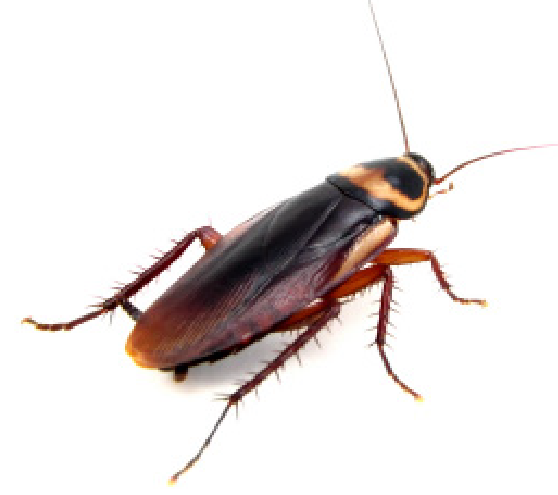
American Cockroach (Periplaneta americana)
Commonly called the “Durban Roach” in KwaZulu-Natal
Appearance
The American cockroach is one of the largest cockroach species that invades homes and buildings:
- Adults measure 28–44 mm long (up to 50 mm with wings extended)—sometimes almost 2 inches.
- Colour is a distinctive glossy reddish-brown to mahogany, with a pale yellow or cream-coloured band or halo just behind the head (on the pronotum). This yellowish margin is a key identification feature.
- Both males and females have long, fully developed wings that extend beyond the tip of the abdomen. Unlike the German cockroach, American cockroaches are strong fliers, especially on warm, humid nights—they are often attracted to lights and can fly in through open windows or from trees onto roofs.
Habitat and behaviour
Despite the name “American,” this species originated in Africa and was spread globally through trade. In South Africa it thrives in warm, humid coastal areas (KwaZulu-Natal, Eastern Cape, Western Cape lowveld, and Limpopo).
They prefer warm, dark, damp environments and are commonly found in:
- Sewer systems, manholes, and storm-water drains
- Basements, boiler rooms, and underground parking garages
- Kitchen and bathroom cupboards, especially near leaking pipes
- Void spaces under sinks and behind large appliances
- Restaurant and hotel grease traps and drainage channels
- They can survive outdoors year-round in subtropical and tropical areas and frequently move indoors during heavy rain or when nights cool down.
Life cycle and reproduction
- Females produce a dark brown, bean-shaped egg capsule (ootheca) about 8–10 mm long.
- Each capsule contains an average of 14–16 eggs (sometimes up to 18).
- A single female can produce 25–30 capsules in her lifetime (potentially 400–500 offspring).
- Unlike German cockroaches, the female does not carry the capsule until hatching; instead, she glues it or drops it within 24–48 hours in a sheltered, humid spot close to food—often inside cracks, under cardboard, or behind fridges.
- Nymphs hatch after 6–8 weeks and take 6–18 months to reach adulthood, depending on temperature and food availability.
Why they are a serious public-health pest
American cockroaches live and breed in highly contaminated environments—sewers, drains, and refuse areas—and then walk across kitchen counters, food-preparation surfaces, and stored food at night. They mechanically transfer:
- Salmonella, E. coli, Shigella, and other enteric bacteria
- Parasite eggs (e.g., roundworms, hookworms)
- Fungal spores and viruses
Their droppings, saliva, and shed skins also contain potent allergens that can trigger asthma and allergic reactions, especially in children.
Signs of an American cockroach infestation
- Large reddish-brown cockroaches seen scurrying when lights are turned on (they are very fast runners)
- Seeing them fly towards lights at night
- Dark cylindrical droppings that look like grains of rice or mouse droppings
- Egg capsules glued in hidden corners
- A distinctive musty, oily odour in heavy infestations
Control challenges
Because many live in sewers and drains outside the building, indoor treatments alone are rarely enough. Effective control usually requires:
- Professional treatment of indoor harbourages with residual insecticides and insect growth regulators
- Application of insecticidal dusts under appliances
- Drain treatments
- In coastal KwaZulu-Natal the warm, humid climate means American cockroaches are active all year and can re-invade treated premises from surrounding sewers and gardens if follow-up treatments are neglected.
If you’re seeing big reddish-brown “Durban Roaches” flying around lights or scurrying out of drains, don’t wait—call SWAT Exterminators for a comprehensive targeted treatment plan that covers both the inside of your property and the external drainage system.
Keep the Durban Roach where it belongs—outside and far away from your family and food.